
Angel Reese Steps Up For Hailey Van Lith – But There’s More To The Story
When Angel Reese recently opened up about her bond with fellow WNBA rookie Hailey Van Lith, fans took notice. Describing herself as a “big sister” to the former LSU teammate, Reese painted a picture of loyalty, mentorship, and sisterhood — one that resonated with some and raised eyebrows for others.
But this isn’t just a feel-good story about friendship on and off the court. Behind Reese’s heartfelt words lies a deeper narrative — one that speaks to power dynamics, public scrutiny, and the unique pressure placed on women in sports to navigate both performance and perception.
Angel Reese has stepped up for Hailey Van Lith — but as with so many things in their young careers, there’s more to the story than meets the eye.

A Public Confession That Sparked Debate
“I’ve always looked out for her,” Reese said in a recent media session. “Even when we were younger — back in high school and AAU — I’ve just naturally taken on that big sister role. Hailey’s tough, but sometimes people forget she’s human too.”
Reese’s comment came in response to a question about the pair’s time together at LSU and their transition to the WNBA. While Reese joined the Chicago Sky as the 7th overall pick, Van Lith was drafted later by the Seattle Storm. Despite being on separate teams, their names continue to be intertwined — both due to their past chemistry and the constant comparisons drawn by fans and analysts.
The “big sister” label, while seemingly harmless, opened up a wave of commentary on social media. Was it a sincere gesture of support? Was it Reese reclaiming control of the narrative surrounding Van Lith’s underwhelming senior year? Or was it, as some skeptics suggested, a subtle power move?
An Uneven Final Year at LSU
To understand the context, you have to rewind to the 2023–24 college season. When Van Lith transferred from Louisville to join LSU, expectations were sky-high. She was joining a championship-winning roster led by Reese, with Kim Mulkey at the helm, and the assumption was that the two would form a lethal duo.
Instead, the season was marked by inconsistency. Van Lith, a natural shooting guard, was tasked with running point — a role that didn’t always suit her game. Critics were vocal, and Van Lith often took the brunt of the blame for LSU’s stumbles.
Reese, for her part, remained publicly supportive — but the chemistry didn’t always translate on the court.
Now, with both players in the WNBA, Reese’s recent comments have renewed attention on that complicated dynamic.
What Fans Think vs. What’s Real
Social media has split into factions. Some fans view Reese’s “big sister” claim as a beautiful show of support between two women rising through adversity. Others suggest there’s an imbalance at play — that Reese is unintentionally (or intentionally) reinforcing a narrative that places her above Van Lith, not beside her.
One Twitter user posted:
“Angel always rides for her people. Period. That’s leadership.”
Another countered:
“Something about the way she keeps speaking for Hailey makes me think they’re not as close as we thought.”
It’s a reminder that in the public eye, every word — even those meant with care — gets dissected for subtext.
More Than Teammates: A Brand Partnership in the Making?
Some insiders believe the Reese–Van Lith dynamic may soon evolve beyond basketball. Both women have leveraged their NIL (Name, Image, Likeness) deals into serious branding power during their college years, and the possibility of joint appearances, endorsements, or even content collaborations has been floated by marketing agencies.
“They have contrasting styles — Reese is bold and loud, Van Lith is intense and stoic — but that makes them perfect foils for brand storytelling,” said a former LSU athletics media consultant. “If they lean into their differences while showing mutual respect, it could be a marketing goldmine.”
That possibility adds yet another layer to Reese’s “big sister” claim. Is she simply protecting someone she genuinely cares about? Or is she also crafting a long-term partnership image — one that fans can invest in?
Reese’s Evolution: From Villain to Voice
It’s also worth examining how far Angel Reese has come in a very short time. Once dubbed the “villain” of women’s college basketball following her viral moment in the 2023 NCAA championship game, she has since embraced her voice and platform.
Reese has positioned herself not just as an athlete, but as an advocate — for her teammates, for Black women in sports, and for control over one’s own story.
Her protective stance toward Van Lith may simply be an extension of that ethos. In a league where rookies are expected to adapt quickly, learn quietly, and defer to veterans, Reese is unapologetically vocal — and she’s bringing her people with her.
“Whether y’all like it or not, I’m going to speak up,” she told reporters earlier this month. “Hailey knows I’ve got her back, and that’s all that matters.”
Where Hailey Van Lith Stands
Interestingly, Van Lith herself has remained mostly quiet on the matter. In a brief interview during Storm training camp, she acknowledged Reese’s support.
“She’s always been like that,” Van Lith said. “She checks in. She’s honest. She doesn’t sugarcoat things. I respect the hell out of that.”
Still, some observers note that Van Lith is trying to carve her own path in Seattle — away from the media frenzy and under a new coaching system that encourages individual growth. Whether she embraces the “little sister” label remains to be seen.
What This Means Moving Forward
If nothing else, Angel Reese’s public embrace of Hailey Van Lith signals that loyalty remains a central theme in her journey. Whether fans interpret her “big sister” role as nurturing or overbearing, it’s clear that Reese feels a deep responsibility for those she considers close.
But the story doesn’t end there.
This isn’t just about Reese helping Van Lith adjust to the league. It’s about two young women navigating fame, expectations, and public scrutiny — each with their own style, their own struggles, and their own spotlight. How they continue to support one another, distance themselves, or evolve their relationship could shape not only their careers but the entire narrative around the WNBA’s new generation.
As one fan put it in the comments:
“This is more than basketball. This is sisterhood, legacy, and learning how to survive in the spotlight — together or apart.”
Conclusion
Angel Reese stepped up for Hailey Van Lith — but in doing so, she also stepped into a larger conversation about identity, influence, and the delicate balance between support and self-definition. One thing’s for sure: This story is still being written, and the next chapter may be even more revealing than the las
News
Now everyone’s asking: Was Dave Portnoy’s message a spark or sabotage for Caitlin Clark?
Now everyone’s asking: Was Dave Portnoy’s message a spark or sabotage for Caitlin Clark? In the world of sports, few…
Indiana Fever insiders reveal how Dave Portnoy’s message actually impacted Caitlin Clark’s mindset before tip-off.
Indiana Fever insiders reveal how Dave Portnoy’s message actually impacted Caitlin Clark’s mindset before tip-off. In the whirlwind world of…

Angel Reese reportedly reacts behind the scenes after seeing Dave Portnoy back Caitlin Clark so fiercely.
Angel Reese reportedly reacts behind the scenes after seeing Dave Portnoy back Caitlin Clark so fiercely. The WNBA’s burgeoning rivalry…
Caitlin Clark’s unexpected response to Dave Portnoy’s viral statement immediately shifted the conversation.
Caitlin Clark’s unexpected response to Dave Portnoy’s viral statement immediately shifted the conversation. In the fast-paced world of sports and…
Dave Portnoy publicly calls out Caitlin Clark with a bold warning before the Chicago Sky game — fans were left stunned.
Dave Portnoy publicly calls out Caitlin Clark with a bold warning before the Chicago Sky game — fans were left…
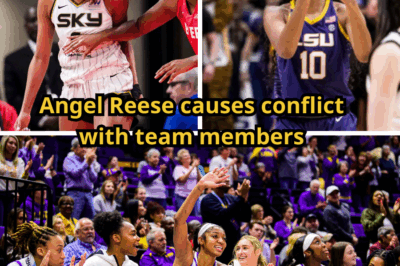
Angel Reese’s future with the team is hanging by a thread as sources reveal a growing divide inside the locker room.
Angel Reese’s future with the team is hanging by a thread as sources reveal a growing divide inside the locker…
End of content
No more pages to load